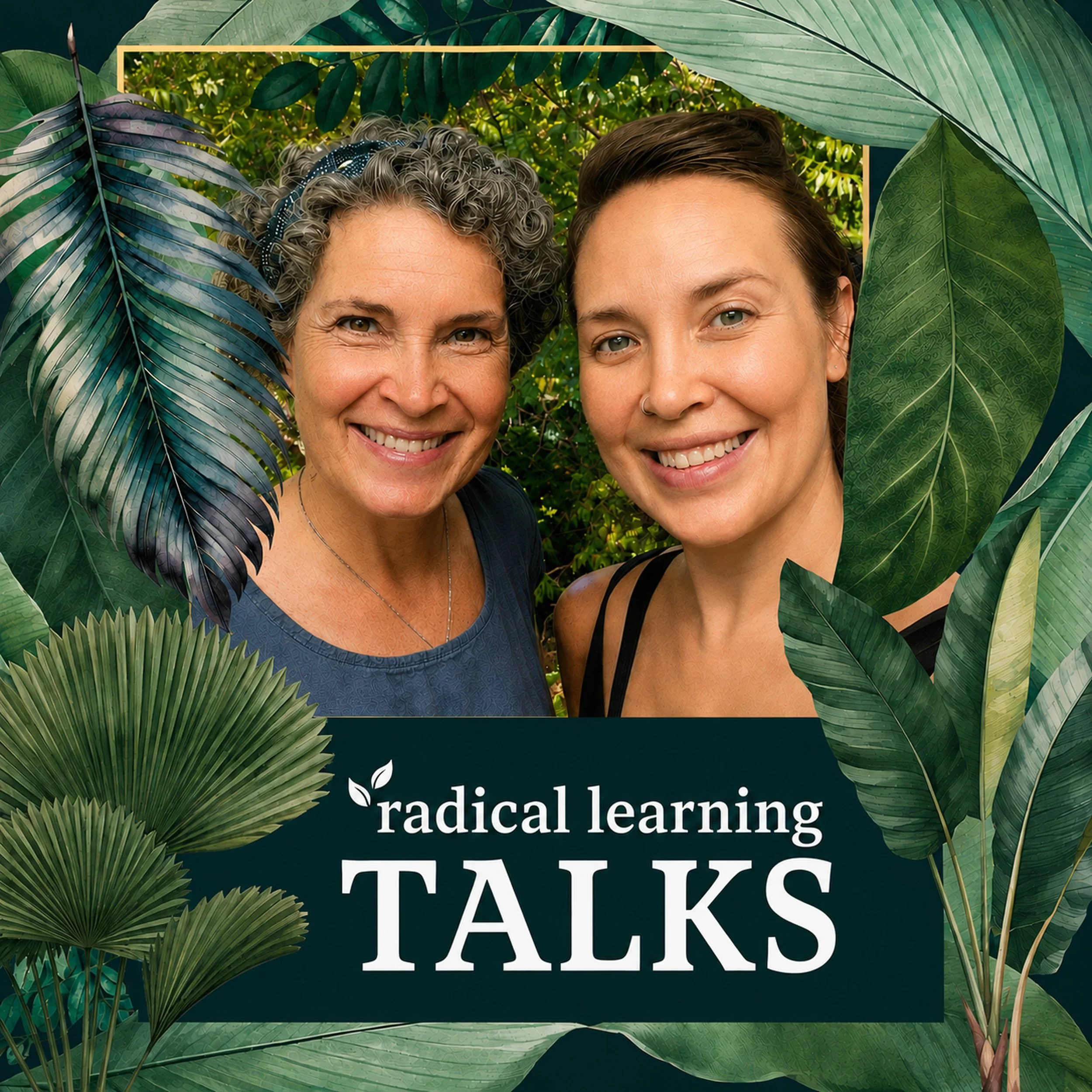
Can Kids Socialize Without School? What Parents Need to Know

Can kids really socialize without school? It’s one of the biggest fears parents face when questioning conventional education. But what if the real question isn’t whether children can socialize outside school — but whether school is actually the gold standard for healthy social development in the first place?

If you’re questioning conventional schooling but worried about friendships, belonging, or social development, you’re not alone.

“But what about socialization?”

For parents questioning school, this question can feel almost unavoidable. Sometimes it comes from worried grandparents. Sometimes from friends. Sometimes from our own inner voice at 2 a.m., when all the doubts get louder.

And honestly, it’s not a silly question.

When we’ve been raised to believe that school is where children learn how to be with other people — how to make friends, navigate relationships, collaborate, belong — it makes perfect sense that stepping outside that model can feel unsettling.

For many parents, this is the sticking point.

You might have concerns about academic pressure, your child’s wellbeing, anxiety, conformity, or whether conventional schooling is actually serving them. But then this question appears and seems to stop everything:

If my child isn’t in school, how will they socialize?

Behind that question often lives something much more tender.

Will they be lonely?

Will they find their people?

Will they miss out on something essential?

Will I make a decision that harms them socially?

These fears deserve to be taken seriously. Not dismissed with slogans or simplistic answers. But they also deserve a closer look—because embedded in this question are some surprisingly unexamined assumptions about childhood, belonging, and what healthy human connection actually looks like.

In this episode, we explore:

  • Why socialization is one of the biggest fears for parents questioning school

  • What we actually mean when we talk about socialization

  • Whether school is really the social ideal many assume it is

  • How introverted and neurodivergent children may experience social expectations differently

  • Why meaningful connection doesn’t have to happen in same-age peer groups

  • What healthy belonging can look like beyond conventional schooling

Socialization is often treated like this process of ‘peopleing’ — but what do we actually mean by that?
— Sari González

The Assumption We Rarely Question

One of the most interesting things about the socialization conversation is how rarely we stop to ask what we actually mean by the word.

It gets thrown around as if its meaning is obvious.

Of course children need socialization.

But what exactly are we talking about?

Learning how to relate to other humans? Absolutely.

Learning empathy, communication, friendship, conflict resolution, collaboration, boundaries, belonging? Yes, all of that matters deeply.

But sometimes the word seems to carry something else as well — an assumption that becoming socially healthy means learning how to fit into certain environments, tolerate certain structures, and adapt to social norms that may or may not actually serve us.

Those are not the same thing.

And once we begin teasing that apart, the conversation gets much more interesting.

Because what if the real question isn’t whether children can socialize outside school?

What if the question is whether school has become our default answer without us ever really examining why?

Is Being Surrounded by Other Children the Same as Connection?

One of the strongest assumptions many of us carry is that children need school because that’s where they are surrounded by peers.

And yes, proximity creates opportunities for interaction.

But proximity is not the same thing as meaningful relationship.

Children in school spend their days in highly structured environments. Their interactions are shaped by schedules, rules, institutional expectations, and adult authority. Much of their social life happens within systems they have very little control over.

Some children genuinely thrive in those environments.

Others do not.

Some children make close friends, develop confidence, and enjoy the social energy of school life.

Others experience exclusion, chronic comparison, bullying, pressure to conform, or the exhausting work of masking parts of themselves in order to fit in.

All of those experiences are social experiences.

But we should be honest that “being around other children” is not automatically the same as healthy social development.

That distinction matters.

Not Every Child Is Built for the Same Social Experience

This is where the conversation often becomes deeply personal.

Because so many assumptions about social development are built around a very narrow idea of what healthy social behavior is supposed to look like.

Outgoing.

Flexible.

Socially eager.

Comfortable in groups.

Comfortable with constant peer interaction.

But what if that simply isn’t your child?

As Sari said in the episode:

What if you’re an introvert and you don’t actually like people?
— Sari González

It’s a provocative question — but an important one. Because not every child experiences social life the same way.

Some children are deeply social but prefer one-on-one connection.

Some need much more recovery time after social interaction.

Some neurodivergent children find conventional peer dynamics overwhelming, confusing, or simply uninteresting.

Some connect more deeply through shared passions than through casual group settings.

And none of that automatically means something is wrong.

One of the harms of narrow social expectations is that children who don’t match them are often treated as if they are lacking, rather than simply different.

That’s worth reflecting on — not as a parenting exercise, but as a cultural one.

Friendship Is Bigger Than School

Another idea many of us absorb without noticing is that children’s friendships are supposed to happen primarily with peers their own age.

This makes sense if school has been our primary frame.

But outside institutional schooling, human relationships tend to look much more varied.

Children build relationships with siblings, cousins, neighbors, family friends, mentors, younger children, older children, online friends, activity groups, and people who share specific passions or interests.

As Becka said in the episode:

Friendships can take so many different forms and shapes.
— Becka Koritz

That feels important.

Because when parents worry about children missing out socially, what they are often imagining is one very particular model of friendship — the school friendship model.

Same age.
Same location.
Frequent contact.
Shared routines.

That can be wonderful.

But it is not the only way meaningful human connection happens.

Adults know this intuitively. We choose friendships based on resonance, trust, shared values, humor, emotional safety, common interests — not birth year.

Children are not so different.

Human Connection Happens Everywhere

Perhaps one of the most liberating shifts is recognizing that social development is not something school owns.

Relationships happen everywhere.

In families.

In neighborhoods.

Through hobbies.

In shared projects.

At community gatherings.

Through online communities.

In mixed-age spaces.

In conversations with trusted adults.

In everyday life.

That doesn’t mean every alternative educational path automatically creates rich social opportunities. Of course not. Connection often requires intention, access, support, and community.

But it does mean the question becomes less binary than we are often led to believe.

It is not simply:

school = socialized
no school = isolated

Life is far more nuanced than that.

What Many Parents Are Really Asking

When parents ask about socialization, what they are often really asking is whether their child will belong.

That is a profoundly human concern.

Belonging matters. Friendship matters. Feeling connected matters.

The question is not whether relationships are important.

The question is whether we have been taught to imagine only one acceptable path toward them.

Some children flourish socially in conventional school. Some struggle deeply. Some thrive in homeschooling or home education communities. Some find belonging in unexpected places. Some need time to heal from painful school experiences before connection becomes easier.

There is no one-size-fits-all answer.

But perhaps that is exactly the point.

The goal is not simply exposure to other humans.

The goal is meaningful, healthy human connection.

And those are not always the same thing.

Want to Go Deeper?

This article was inspired by a conversation on the Radical Learning Talks podcast, where we unpack the fears, assumptions, and myths surrounding socialization and life beyond conventional schooling.

If this question has been living in your mind, we’d love for you to listen to the full episode.

And if you have your own parenting, school, or learning questions, you can send them our way for Dear Sari & Becka, where we explore real dilemmas from real families.

Listen to the Radical Learning Talks episode here:

Read More
Rebecka Koritz Rebecka Koritz

What’s Wrong with the Modern School System?

If school is supposed to prepare children for life, why are so many children anxious, disengaged, or convinced they’re failing? In this episode of Radical Learning Talks, we explore what’s really wrong with the modern school system — and why more parents are beginning to question conventional schooling and explore alternatives.

If school is supposed to prepare children for life, why are so many children anxious, disengaged, exhausted — or quietly convinced they’re failing?

This is one of those questions that can open a very uncomfortable door.

Because for many of us, school has simply been presented as the way. The normal path. The obvious thing children do.

You go to school.
You learn what you’re told.
You grow up.
You become a functioning adult.

That story is so deeply ingrained that many people never stop to question it at all.

And to be clear: we know that for many families, conventional schooling is the only realistic option right now. We know that circumstances, geography, finances, legislation, family dynamics, and many other factors shape what is possible. This is not about shaming parents whose children are in school.

But we do think it’s time to ask harder questions.

Because when so many children are struggling… when educators are burning out… when anxiety and disconnection seem to be rising… when more and more families are quietly whispering “something doesn’t feel right”

…it’s worth asking whether the problem is individual children.

Or whether the system itself deserves a closer look.

This conversation came out of a Radical Learning Talks episode where we sat down and explored exactly that.

Not because we think education doesn’t matter.

Quite the opposite.

We care so deeply about young people’s right to meaningful education that we think questioning the systems we’ve inherited is part of that responsibility.

In this episode, we explore:

  • where the modern school system actually came from

  • why one-size-fits-all education creates so much harm

  • how school culture shapes society far beyond childhood

  • what young people may actually need for an uncertain future

  • the role of youth rights, autonomy, and adultism

  • why so many families are exploring homeschooling, home education, and alternative education

  • what becomes possible when we begin questioning conventional schooling

School Was Never Really Designed Around Children

One of the things that surprises people most when they start questioning education is learning where the modern school system actually came from.

Most of us were never taught this.

School is simply presented as normal. Natural. A benevolent institution created for the good of children.

But when you start looking at the history, the story becomes much less comforting.

Mass schooling didn’t emerge because adults sat down and asked: What would best support young humans to thrive?

It emerged in response to social, political, and industrial needs. Systems needed order. Factories needed compliant workers. States needed obedient citizens. Standardization made sense in that context.

And while education has evolved in many ways since then, many of the underlying assumptions remain surprisingly familiar.

Sit still.

Follow instructions.

Move at the designated pace.

Learn what has been predetermined.

Demonstrate success in approved ways.

Repeat.

As Becka says in the episode:

We’re not a product. We’re not robots. We’re not objects. We are human beings.
— Becka Koritz

That may sound obvious.

And yet many children move through educational environments that still treat them more like units to be processed than whole human beings with their own rhythms, needs, curiosities, and ways of making meaning.

That’s a hard thing to sit with.

The One-Size-Fits-All Problem

We often find ourselves coming back to this question:

How did we collectively decide that wildly different human beings should all move through the same system, at the same pace, in roughly the same way?

If you think about it for even a moment, it’s kind of extraordinary.

Children are not standardized.

Some are highly verbal. Some are deeply embodied. Some learn through movement. Some through observation. Some need quiet. Some need collaboration. Some question everything. Some take longer to warm up. Some are neurodivergent and navigating sensory overwhelm in environments that simply don’t work for their nervous systems.

And yet the expectation is often adaptation.

Can the child fit the system?

Rather than:

Does the system actually fit the child?

This is one of the reasons so many families begin exploring alternatives like homeschooling, home education, self-directed learning, or more relational educational approaches.

Not because they don’t value learning. But because they do.

Because they know that forcing children into environments that disconnect them from themselves comes at a cost.

That doesn’t mean every family should leave school.

But it does mean we should stop pretending that conventional schooling works equally well for everyone.

It clearly doesn’t.

What Are We Actually Preparing Children For?

This is one of the most common justifications for school:

We’re preparing children for the future.

And honestly?

We think that phrase deserves much more scrutiny.

Preparing them for what, exactly?

A future none of us can accurately predict?

Jobs that may not exist?

Technologies we haven’t imagined yet?

Social realities that are shifting faster than ever?

If the future is uncertain—and it clearly is—then maybe the most important capacities are not blind compliance, performance under pressure, or memorizing information disconnected from lived meaning.

Maybe what matters more is:

  • critical thinking

  • creativity

  • adaptability

  • emotional intelligence

  • collaboration

  • initiative

  • problem-solving

  • self-awareness

  • relationship skills

  • the ability to ask meaningful questions

And perhaps just as importantly:

the ability to stay connected to yourself.

Sari says something in the episode that feels especially important:

The biggest criticism I have toward the conventional model is that it is not based on relationship.
— Sari González

That really gets to the heart of it.

Because education is never just about information.

It’s about how young people come to understand themselves, others, learning, authority, belonging, possibility.

And when relationship is missing, something fundamental is missing too.

School Doesn’t Stay in Childhood

One of the things we often talk about in Radical Learning is that school doesn’t just shape children.

It shapes adults, culture, and society.

Think about the patterns many adults carry:

  • fear of getting things wrong

  • constant comparison

  • perfectionism

  • difficulty resting

  • tying worth to productivity

  • needing external validation

  • disconnection from bodily signals

  • anxiety around performance

Now obviously school is not the only force shaping human beings.

But it would be strange to ignore the role of an institution where many people spend over a decade being measured, compared, evaluated, rushed, and expected to perform.

School doesn’t exist outside society. It reflects it. And it helps create it.

If we are living in cultures marked by burnout, competition, disconnection, and chronic stress, we have to be willing to ask whether some of these roots run deeper than adulthood.

The Power Question

At some point, this conversation becomes less about curriculum and more about power.

Who gets to decide what matters?

Who gets listened to?

Whose needs count?

Whose autonomy is respected?

Many education systems still operate from assumptions that young people are incomplete beings who need to be shaped, managed, corrected, and prepared by adults who know better.

This is where conversations about youth rights and adultism become incredibly important.

Of course children need guidance.

That’s not the question.

The question is what kind of guidance.

Control and guidance are not the same thing.

Authority and relationship are not the same thing.

Protection and domination are not the same thing.

When young people are denied voice, agency, choice, or meaningful participation, the impact runs deep.

What would education look like if children were treated less as passive recipients and more as full human beings?

That question changes everything.

So What Are the Alternatives?

If conventional schooling feels misaligned, many families assume the choices are painfully binary:

Stay and suffer — or leave completely.

But reality is often much more nuanced.

Some families choose homeschooling. Others choose home education. Some explore self-directed learning communities. And some seek out more human-centered schools. Others remain in school but radically shift how they relate to learning, pressure, autonomy, and advocacy at home.

And some simply begin by asking questions.

Not everyone has equal access to alternatives.

But even when structural constraints exist, mindset shifts can still be transformative.

Because often the first shift isn’t external. It’s internal.

It’s beginning to see young people differently.

And honestly?

We know that moment.

That unsettling, lonely, disorienting moment where something you’ve always accepted suddenly doesn’t make sense anymore.

That moment is where it starts.

There Is Another Conversation Emerging

One of the most hopeful things we’re witnessing is that more people are asking these questions.

Parents. Educators. Young people. Organizations. Communities.

People are questioning not just school, but the broader assumptions beneath it.

What is education for?

What do children actually need?

What kind of adults are we trying to cultivate?

What happens when relationship becomes central?

This doesn’t mean everyone agrees. Far from it. But the conversation is shifting. And that is important, because meaningful change always begins with people willing to imagine something different.

Want to Keep the Conversation Going?

If this conversation stirred something in you — questions, discomfort, curiosity, recognition — you’re not alone.

These are exactly the kinds of conversations we care deeply about.

We explore them regularly in Radical Learning Talks, and we also answer real parent questions in Dear Sari & Becka through our newsletter.

And if you’re looking for community with other people questioning conventional schooling and exploring more relational, human-centered ways forward, you’ll probably feel right at home inside Un-Skool.

Listen to the full conversation

Radical Learning Talks – Episode 82
What’s Wrong with the School System?

Read More